The SOC Doesn’t Need to Start Over with Every Alert
Summary
AI can make failed intrusion attempts faster and cheaper to retry. The article argues that SOCs should preserve evidence, reasoning, uncertainty, constraints, and lessons across handoffs to reduce investigation delays and improve response.
Key points
- AI can speed up attackers’ troubleshooting and retries during reconnaissance, privilege escalation, and exploitation without providing fundamentally new capabilities.
- Threat reporting describes AI use in attacker workflows; the article cautions that assessed AI assistance does not establish confirmed in-the-wild deployment or prevalence.
- Provider safety guardrails can disrupt misuse but should not be treated as an organization’s security boundary.
- SOC handoffs can discard identity context, evidence provenance, hypotheses, telemetry gaps, decision ownership, and operational constraints, forcing analysts to reconstruct cases.
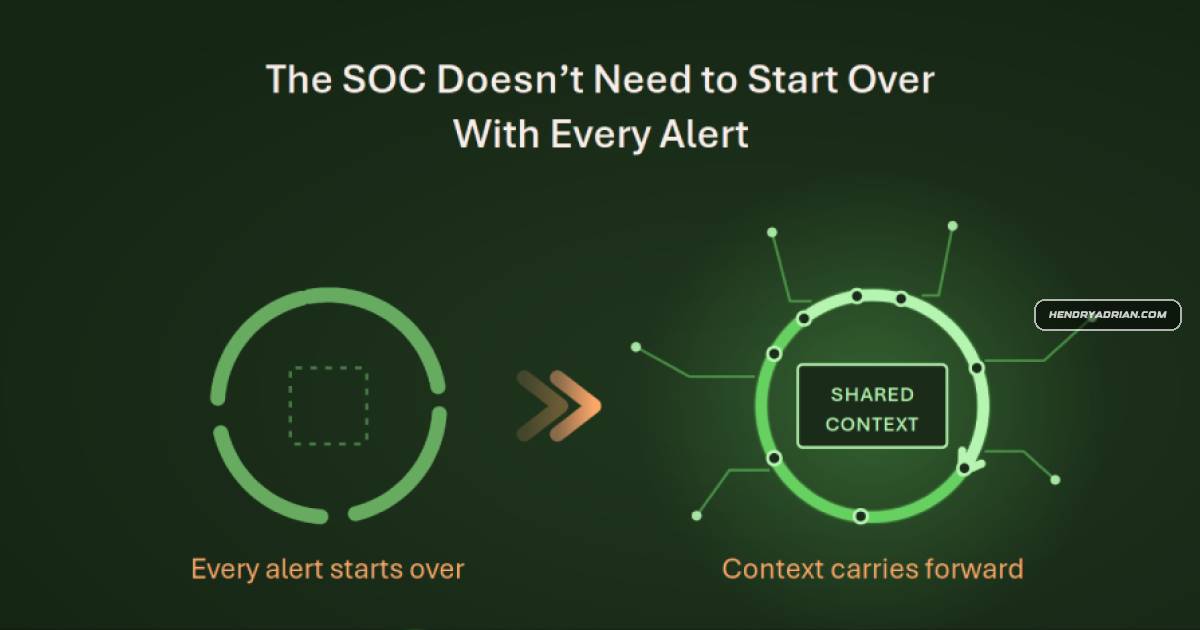
- A stateful SOC would share environmental, evidence, decision, control, and learning state across security tools and response workflows.
- The article recommends recording unknowns and telemetry gaps explicitly, and keeping agent actions bounded by policy, approval, and audit requirements.
Article Details
- Topic
- Stateful SOC workflows that preserve evidence, reasoning, uncertainty, and decision constraints across incident-response handoffs as AI accelerates attacker workflows