
How AI Tar Pits Trap LLM Scrapers—and the Risks They Create
Summary
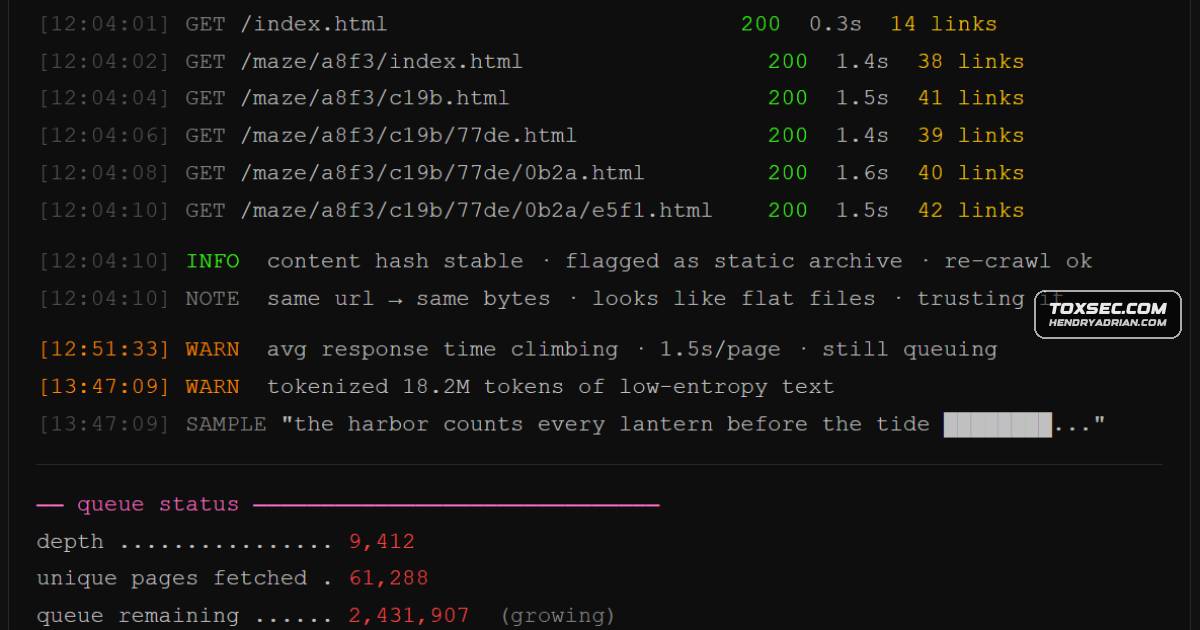
AI tar pits lure suspected LLM crawlers into endless machine-generated pages, wasting resources and potentially poisoning training data. The article explains how Nepenthes, Iocaine, and Cloudflare AI Labyrinth work, alongside deployment risks and the evolving cat-and-m.
Key points
- Nepenthes creates deterministic, linked fake pages that keep crawlers following URLs while intentional delays waste their time.
- Iocaine and other tar pits can use Markov-chain text to produce plausible but meaningless content intended to contaminate scraped training data.
- Cloudflare says AI Labyrinth serves linked AI-generated pages to suspected bots; crawler behavior in the maze can also provide a detection signal.
- The article describes training-data poisoning and model collapse as potential risks, not as demonstrated outcomes from these tools.
- Tar pits can ensnare legitimate crawlers and increase server load; the article notes that careless deployment could affect search visibility.
- Generated mazes may be distinguishable from real sites, and the article describes an ongoing adaptation race between defenders and scrapers.
Article Details
- Topic
- AI tar pits that trap unauthorized LLM crawlers in loops of generated pages, wasting crawler resources and potentially poisoning training data.
People
Vendors
Tools
IocaineAI tar pits like Nepenthes, Iocaine, and Cloudflare’s AI Labyrinth trap unauthorized LLM crawlers in endless loops of machine-generated pages, wasting compute and making bot detection easier.NepenthesAI tar pits like Nepenthes, Iocaine, and Cloudflare’s AI Labyrinth trap unauthorized LLM crawlers in endless loops of machine-generated pages, wasting compute and making bot detection easier.