
Supreme Court Rules Police Need Warrants for Cellphone Location History
Summary
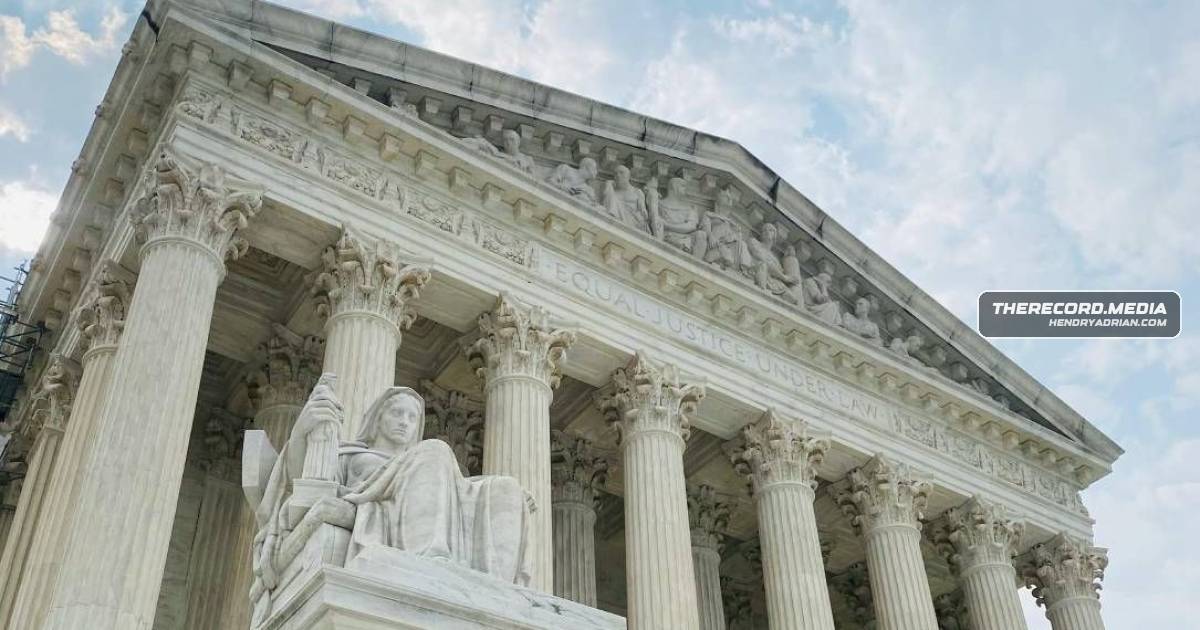
The Supreme Court ruled 6-3 that police searches of cellphone location history require a warrant, potentially constraining geofence searches. It sent Okello Chatrie’s case back to the Fourth Circuit to assess whether his warrant was constitutional.
Key points
- The Court held that searching a person’s Google Location History is a Fourth Amendment search requiring a warrant.
- The ruling rejected the government’s argument that sharing location data with a company removes Fourth Amendment protection under the third-party doctrine.
- The case concerns Okello Chatrie, whose location history was used in a bank robbery investigation; police had a warrant.
- The Court sent the case to the Fourth Circuit to determine whether the warrant was reasonable and sufficiently narrow.
- The ruling may constrain geofence searches, which seek location data for phones in a specified area and time, but did not outlaw them outright.
- The article says Google no longer stores Location History, while other companies continue to collect or store user location data.
Article Details
- Event Type
- U.S. Supreme Court ruling on cellphone location-history searches and the Fourth Amendment
- Impact
- The Court held that police access to cellphone location-history data is a Fourth Amendment search requiring a warrant. It sent Okello Chatrie’s case back to the Fourth Circuit to assess whether the warrant in his case was reasonable, sufficiently narrowly tailored, and constitutional. The ruling may constrain geofence searches and similar broad data demands, but it did not outlaw geofence searches.
People
Adam UnikowskyChatrie’s lawyer, who argued that geofence searches should be considered unconstitutional general warrants and commented on the ruling.Andrew Guthrie FergusonGeorge Washington University law professor who commented on the ruling’s significance for Fourth Amendment privacy and cellphone location data.Elena KaganJustice who wrote the majority opinion, describing Google Location History as resembling private materials users expect to be protected from government access.Greg NojeimDirector of the Security and Surveillance Project at the Center for Democracy and Technology; he commented on the ruling’s implications for Fourth Amendment and digital privacy protections.Okello ChatrieThe case centered on Chatrie, who was charged with bank robbery after police used Google Location History records to identify him; his lawyers challenged the search.
Vendors
AppleThe decision strengthens digital privacy protections and could limit geofence searches and other broad demands for data from companies like Google, Apple, Uber, and Lyft.GoogleThe decision strengthens digital privacy protections and could limit geofence searches and other broad demands for data from companies like Google, Apple, Uber, and Lyft.LyftThe decision strengthens digital privacy protections and could limit geofence searches and other broad demands for data from companies like Google, Apple, Uber, and Lyft.UberThe decision strengthens digital privacy protections and could limit geofence searches and other broad demands for data from companies like Google, Apple, Uber, and Lyft.
Products
Countries
Industries
Law enforcementof the government’s position that its search was protected by third-party doctrine, an argument law enforcement has made to defend geofence searches, asserting that because individuals choose to share informationTechnologyrights,” Greg Nojeim, director of the Security and Surveillance Project at the Center for Democracy and Technology, said in an interview.