MuddyWater Uses Phishing, RMM Tools and Rust Malware in Middle East Campaigns
Summary
A technical review of MuddyWater campaigns describes phishing with malicious documents and legitimate RMM installers, plus Rust-based payloads used for reconnaissance and C2 communications. The article recommends endpoint behavior monitoring and EDR.
Key points
- MuddyWater campaigns target government, diplomatic, education, telecommunications, insurance, pension and IT organizations, with long-term access and intelligence gathering as apparent goals.
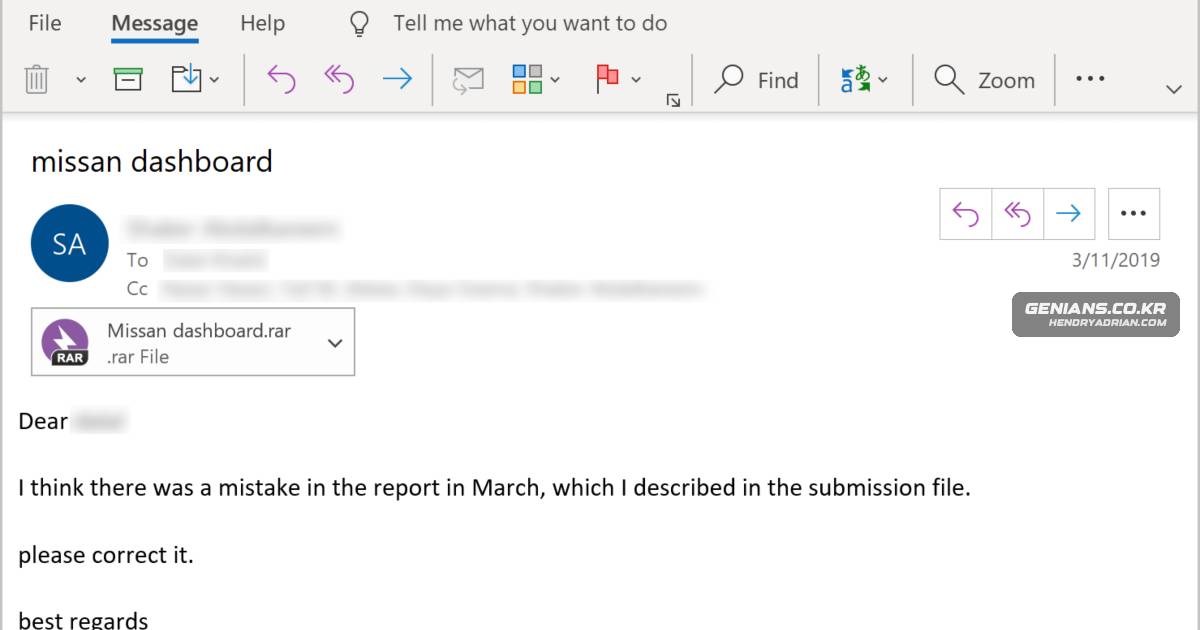
- Spear-phishing commonly delivers Word documents that prompt users to enable macros; attackers also used HTML lures, cloud-storage links and encrypted archives.
- The group abused legitimate RMM platforms including Syncro and Atera to gain persistent remote access that could resemble normal administration.
- Recent campaigns used Rust-based payloads for system reconnaissance and C2 communication; the article describes malware checks for installed security products.
- A 2025 diplomatic-themed phishing document reconstructed and executed a payload that collected system details and contacted a C2 server.
- A January 2026 campaign used a malicious Word document disguised as cybersecurity guidance, dropping a Rust-based executable.
- The report recommends EDR and endpoint behavior analysis to detect suspicious document-driven execution, reconnaissance and external communications.
Article Details
- Attack Vectors
- Spear-phishing emails delivered malicious Word documents disguised as business materials, government requests, diplomatic invitations, or cybersecurity guidance.
- Blurred document content and enable-content prompts persuaded recipients to activate VBA macros, which reconstructed and executed embedded payloads.
- A university-targeting document used an OpenXML attachedTemplate relationship to load a remotely hosted attacker-controlled template.
- HTML attachments and embedded links routed recipients through Dropbox and OneDrive to ZIP archives containing signed RMM installers.
- Legitimate RMM agents were delivered through phishing attachments or download links to enroll victim endpoints into attacker-operated management accounts.
- An Israel university attack delivered a password-protected RAR archive containing a signed Atera installer, obstructing static inspection of the attachment.
- Recent documents concealed encoded executable data in UserForm controls, wrote PE files with .log or .ini extensions, and executed them through WMI or command-shell mechanisms.
- A loader decrypted an embedded Rust payload using a repeated XOR key and executed the restored payload in memory.
- Defensive Notes
- The article recommends endpoint behavior-based detection and correlation rather than relying solely on perimeter, email, document, or signature-based defenses.
- Monitor Office processes creating executable payloads, including files with misleading .log or .ini extensions, and correlate creation with subsequent execution.
- Correlate document execution with WMI activity, command-shell execution, system enumeration, security-product discovery, and external network connections.
- Monitor anomalous C2 destinations and periodic communication patterns following document execution.
- Distinguish authorized remote administration from suspicious installation and enrollment of legitimate RMM agents; signed installers and official service traffic do not establish benign intent.
- The article notes that legacy Office environments and users explicitly enabling macros can undermine macro-blocking protections.
- Genians claims that Genian Insights E detects anomalous document-to-payload process relationships, C2 connections, and reconnaissance activity.
Indicators of compromise
| Type | Indicator | Context |
|---|---|---|
| DOMAIN | nomercys[.]it[.]com | C2 domain used by the January 2026 Rust payload to receive system information and deliver additional commands or payloads. |
| DOMAIN | screenai[.]online | C2 server receiving encrypted system information from the ManagerProc.log payload in the August 2025 diplomatic-invitation attack. |
| DOMAIN | stratioai[.]org | HTTPS C2 domain used by the Rust payload in the November 2025 Israel IT-service-provider attack. |
| IPV4 | 159[.]198[.]66[.]153 | US-hosted C2 address associated with nomercys.it[.]com. |
| IPV4 | 159[.]198[.]68[.]25 | US-hosted C2 address associated with stratioai[.]org. |
| MD5 | 0873ce3db84b79da935f71df3d6c8e6d | Artifact hash listed in the article's MuddyWater IOC section; individual file association is not disclosed. |
| MD5 | 0a95918fd6000a69b8a70609f93e910f | Artifact hash listed in the article's MuddyWater IOC section; individual file association is not disclosed. |
| MD5 | 1e9a4e774b61acc8a6b35ee50417e661 | Artifact hash listed in the article's MuddyWater IOC section; individual file association is not disclosed. |
| MD5 | 1f280f51eeb6cf895fe80082ce725841 | Artifact hash listed in the article's MuddyWater IOC section; individual file association is not disclosed. |
| MD5 | 23d99f912f2491749b89e4fd337273bc | Artifact hash listed in the article's MuddyWater IOC section; individual file association is not disclosed. |
| MD5 | 242098c3e87822bffa7c337987065fbe | Artifact hash listed in the article's MuddyWater IOC section; individual file association is not disclosed. |
| MD5 | 244a4f81cff4a8dc5872628a40713735 | Artifact hash listed in the article's MuddyWater IOC section; individual file association is not disclosed. |
| MD5 | 2ed6ebaa28a9bfccc59c6e89a8990631 | Artifact hash listed in the article's MuddyWater IOC section; individual file association is not disclosed. |
| MD5 | 3a95186019af1943a0ea0f8eb07a288f | Artifact hash listed in the article's MuddyWater IOC section; individual file association is not disclosed. |
| MD5 | 3ab16bd1c339fd0727be650104b74dd1 | Artifact hash listed in the article's MuddyWater IOC section; individual file association is not disclosed. |
| MD5 | 4055d8b5c2e909f5db8b75a5750a7005 | Artifact hash listed in the article's MuddyWater IOC section; individual file association is not disclosed. |
| MD5 | 43be8a405a7f57cf9f910d829c521b21 | Artifact hash listed in the article's MuddyWater IOC section; individual file association is not disclosed. |
| MD5 | 4c169dde3bc184c42ca7a712a61c6f3c | Artifact hash listed in the article's MuddyWater IOC section; individual file association is not disclosed. |
| MD5 | 64fc017a451ef273dcacdf6c099031f3 | Artifact hash listed in the article's MuddyWater IOC section; individual file association is not disclosed. |
| MD5 | 68352f61da6e3236c4fe760997a981ea | Artifact hash listed in the article's MuddyWater IOC section; individual file association is not disclosed. |
| MD5 | 6d7ce5b03fe61683229c29a859505163 | Artifact hash listed in the article's MuddyWater IOC section; individual file association is not disclosed. |
| MD5 | 74e75830252220cbbe7e3adec4340d2d | Artifact hash listed in the article's MuddyWater IOC section; individual file association is not disclosed. |
| MD5 | 75060f5394b72421c0d8f81f79931aa9 | Artifact hash listed in the article's MuddyWater IOC section; individual file association is not disclosed. |
| MD5 | 7da3d206519086f2725494b3ab095fbb | Artifact hash listed in the article's MuddyWater IOC section; individual file association is not disclosed. |
| MD5 | 806adc79e7ea3be50ef1d3974a16b7fb | Artifact hash listed in the article's MuddyWater IOC section; individual file association is not disclosed. |
| MD5 | 809334c0b55009c5a50f37e4eec63c43 | Artifact hash listed in the article's MuddyWater IOC section; individual file association is not disclosed. |
| MD5 | 93be13bbcad30440a0d0ef3868d67003 | Artifact hash listed in the article's MuddyWater IOC section; individual file association is not disclosed. |
| MD5 | 95d9e6c262632abe004c4693a71eaced | Artifact hash listed in the article's MuddyWater IOC section; individual file association is not disclosed. |
| MD5 | 96d5a7e0e75654c444cb1a915c666ac8 | Artifact hash listed in the article's MuddyWater IOC section; individual file association is not disclosed. |
| MD5 | aaa9db79b5d6ba319e24e6180a7935d6 | Artifact hash listed in the article's MuddyWater IOC section; individual file association is not disclosed. |
| MD5 | aba760ec55fdeccb35adb068443feb89 | Artifact hash listed in the article's MuddyWater IOC section; individual file association is not disclosed. |
| MD5 | b181ecbb7394e3b1394a8c97af65b7e2 | Artifact hash listed in the article's MuddyWater IOC section; individual file association is not disclosed. |
| MD5 | b9a67ffb81420e68f9e5607cc200604a | Artifact hash listed in the article's MuddyWater IOC section; individual file association is not disclosed. |
| MD5 | c381c2cb8fdd6acf1636280b9424f573 | Artifact hash listed in the article's MuddyWater IOC section; individual file association is not disclosed. |
| MD5 | c478e472f6223e7ee92cff8b459e55e2 | Artifact hash listed in the article's MuddyWater IOC section; individual file association is not disclosed. |
| MD5 | c5c0829df294cc4fd701df5d5c55718f | Artifact hash listed in the article's MuddyWater IOC section; individual file association is not disclosed. |
| MD5 | c89671f994af65677aa48b699a01fe9d | Artifact hash listed in the article's MuddyWater IOC section; individual file association is not disclosed. |
| MD5 | cdeb7abfc7775c63745135431272dda3 | Artifact hash listed in the article's MuddyWater IOC section; individual file association is not disclosed. |
| MD5 | e2d6031afd81bf3b6a44de4d0b039055 | Artifact hash listed in the article's MuddyWater IOC section; individual file association is not disclosed. |
| MD5 | ef6ec560efd05d21976a6fd3f489e206 | Artifact hash listed in the article's MuddyWater IOC section; individual file association is not disclosed. |
| MD5 | f06e30dee8629e951cefa73373fdef9d | Artifact hash listed in the article's MuddyWater IOC section; individual file association is not disclosed. |
| MD5 | f1c935ce028022ab2a495eae83adacc6 | Artifact hash listed in the article's MuddyWater IOC section; individual file association is not disclosed. |
| MD5 | f6a4c531e92cbdd5ffac75c76939d7f3 | Artifact hash listed in the article's MuddyWater IOC section; individual file association is not disclosed. |
| MD5 | f97650ede0c39a29b0b5c5472f685d11 | Artifact hash listed in the article's MuddyWater IOC section; individual file association is not disclosed. |
MITRE ATT&CK
T1027 · Obfuscated Files or InformationDocuments concealed payloads as numeric or hexadecimal strings in UserForm controls; a later loader stored its Rust payload as XOR-encoded data.T1033 · System Owner/User DiscoveryPayloads collected usernames, and the November 2025 payload invoked whoami.exe to identify the current user.T1036.008 · Masquerade File TypeExecutable PE payloads were written with misleading .log and .ini extensions, including ManagerProc.log, PhotoAcq.log, and CertificationKit.ini.T1047 · Windows Management InstrumentationWebinar.doc connected to WMI and used Win32_Process to launch the reconstructed PhotoAcq.log executable.T1059.001 · PowerShellMacros in the 2019 Iraq and Jordan attacks invoked PowerShell for backdoor execution and follow-on commands.T1059.003 · Windows Command ShellThe January 2026 macro constructed and executed cmd.exe /c CertificationKit.ini through WScript.Shell.T1059.005 · Visual BasicWord VBA macros reconstructed embedded payloads and initiated their execution, including through Document_Open.T1071.001 · Web ProtocolsThe November 2025 payload established an encrypted HTTPS session for C2 communication with stratioai[.]org.T1082 · System Information DiscoveryPayloads collected computer identification information, including computer names and hostname.exe output.T1140 · Deobfuscate/Decode Files or InformationVBA reconstructed PE files from encoded UserForm data, and PhotoAcq.log decrypted its embedded payload with a repeating 32-byte XOR key.T1204.002 · Malicious FileRecipients were persuaded to open malicious documents, enable macros, extract archives, or install signed RMM packages.T1219 · Remote Access ToolsMuddyWater distributed legitimate Syncro and Atera agents to enroll victim systems and obtain persistent remote administration through official RMM infrastructure.T1221 · Template InjectionThe Jordan university document used an attachedTemplate relationship to load an attacker-controlled remote template.T1518.001 · Security Software DiscoveryThe Rust payload checked installation conditions for 28 security products; the January 2026 payload also collected installed-security-product information.T1566.001 · Spearphishing AttachmentTargeted emails delivered malicious Word documents, HTML attachments, and archives containing RMM installers.T1566.002 · Spearphishing LinkPhishing messages used embedded Dropbox links and download links to deliver malicious archives or RMM agents.T1620 · Reflective Code LoadingPhotoAcq.log copied its encrypted embedded PE into allocated memory, decrypted it, and executed the restored Rust payload in memory.
Threat Actors
Vendors
Atera NetworksInside the archive was a Windows Installer package named "digitalform.msi", whose digital signature listed Atera Networks.GeniansGenian Insights E, Genians’ integrated endpoint security platform, immediately identifies and alerts on anomalous behavior through endpoint behavior-based detection (EDR).ServablySyncro is a legitimate RMM (Remote Monitoring and Management) based IT management platform provided by Servably, a US-based company.
Products
AnyDeskAnyDesk (Free)AteraInside the archive was a Windows Installer package named "digitalform.msi", whose digital signature listed Atera Networks.Genian Insights EGenian Insights E, Genians’ integrated endpoint security platform, immediately identifies and alerts on anomalous behavior through endpoint behavior-based detection (EDR).Microsoft OfficeRecent versions of Microsoft Office block macro execution by default for documents downloaded from the internet or apply enhanced security protections.Microsoft WordIn this process, malicious files delivered via Office documents, including Microsoft Word documents, had been used as a primary delivery mechanism since the initial reporting in 2017, and were observed to be usedN-AbleIn addition to Syncro and Atera, the threat actor was also reported to have used various remote management tools in attacks, including Remote Utilities, ScreenConnect, SimpleHelp, and N-Able.Remote UtilitiesIn addition to Syncro and Atera, the threat actor was also reported to have used various remote management tools in attacks, including Remote Utilities, ScreenConnect, SimpleHelp, and N-Able.ScreenConnectIn addition to Syncro and Atera, the threat actor was also reported to have used various remote management tools in attacks, including Remote Utilities, ScreenConnect, SimpleHelp, and N-Able.SimpleHelpIn addition to Syncro and Atera, the threat actor was also reported to have used various remote management tools in attacks, including Remote Utilities, ScreenConnect, SimpleHelp, and N-Able.SplashtopSplashtop (Free)SyncroThe file "Looking for business insurance no335080.2022-isrotel.msi" contained inside was a Syncro MSI installer.TeamViewerTeamViewer
Countries
EgyptCase: Attacks Targeting Egypt’s Hosting Services, Israel’s Insurance, and Malaysia’s Pension SectorIranBased on technical analysis findings, the threat actor is assessed to be affiliated with Iran’s Ministry of Intelligence and Security (MOIS).IraqThe attack targeted an operator running major telecommunications infrastructure in Iraq and was assessed as aiming to maintain long-term intrusion after obtaining initial access to the internal user environment.IsraelCase: Attacks Targeting Egypt’s Hosting Services, Israel’s Insurance, and Malaysia’s Pension SectorJordanCase: Attack Targeting a University in JordanMalaysiaCase: Attacks Targeting Egypt’s Hosting Services, Israel’s Insurance, and Malaysia’s Pension SectorUnited StatesSyncro is a legitimate RMM (Remote Monitoring and Management) based IT management platform provided by Servably, a US-based company.
Industries
Data hostingIn October 2022, the attacker conducted a spear-phishing attack targeting an Egypt-based data hosting and IT infrastructure service provider, disguising the email as an inquiry about hosting services.DefenseAttack targets are primarily concentrated in sectors critical to national functions, such as government agencies, diplomatic and defense organizations, and energy and telecommunications infrastructure.DiplomacyEducationEnergyThe Middle East is a region of high strategic importance from geopolitical, military, and energy security perspectives, where a significant volume of state-sponsored cyber threat activities has been observed.GovernmentAttack targets are primarily concentrated in sectors critical to national functions, such as government agencies, diplomatic and defense organizations, and energy and telecommunications infrastructure.InsuranceCase: Attacks Targeting Egypt’s Hosting Services, Israel’s Insurance, and Malaysia’s Pension SectorIT servicesCase: Attack Targeting an Israel-Based Company Providing IT ServicesPension fund managementIn April 2023, an attack targeting an individual affiliated with a Malaysian government-run public pension fund management institution was also identified.TelecommunicationsAttack targets are primarily concentrated in sectors critical to national functions, such as government agencies, diplomatic and defense organizations, and energy and telecommunications infrastructure.