Researchers Show How Root Access on Kubernetes Nodes Can Expose SPIFFE/SPIRE Workload Identities
Summary
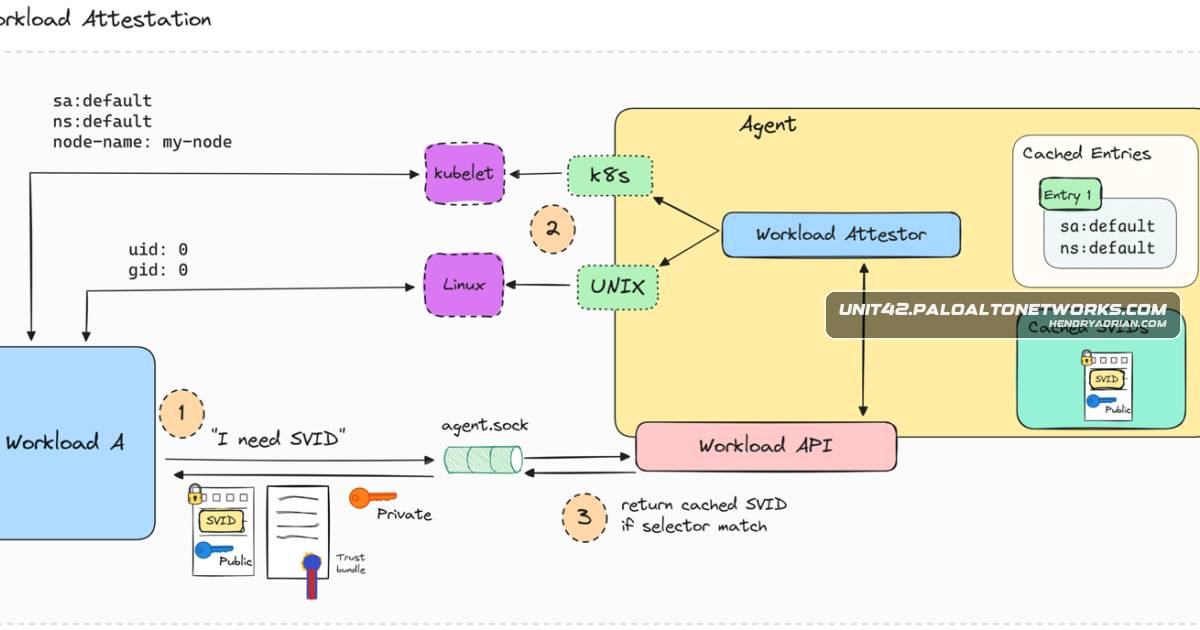
Unit 42 demonstrated that an attacker with root access to a Kubernetes node can spoof cgroup data to trick SPIRE into issuing co-located workloads’ identities. Its Spooffe tool automates identity enumeration; Unit 42 reports no in-the-wild exploitation.
Key points
- The technique requires root-level access to a compromised Kubernetes node.
- An attacker can manipulate cgroup metadata used in SPIRE workload attestation, causing the agent to misidentify the requesting process.
- The agent may then issue a co-located workload’s SVID, enabling the attacker to impersonate that workload and access resources that trust its identity.
- Unit 42 developed Spooffe to automate cgroup selector spoofing and enumerate workload identities available through the local SPIRE agent.
- Unit 42 says it has not observed the technique exploited in the wild.
- Recommended mitigations include restricting root access, prohibiting privileged containers and host access, and minimizing reliance on weak selectors.
Article Details
- Attack Vectors
- An attacker with root access on a compromised Kubernetes node can manipulate cgroup metadata so the SPIRE agent attributes the attacker's process to a co-located workload.
- By spoofing workload selectors, the attacker can cause the SPIRE agent to issue that workload's SVID, enabling workload impersonation and access to services or resources that trust the identity.
- Spooffe automates discovery of running workloads and cgroup paths, then queries the local SPIRE agent to retrieve workload identities.
- Defensive Notes
- Treat root-level access to a node as granting access to all cryptographic identities scoped to that node.
- Harden nodes, restrict root access, prohibit privileged containers and host access, and minimize reliance on weak or easily spoofed selectors.
- The article identifies Cortex XDR and XSIAM, and Cortex Cloud Identity Threat Detection, as protections for the described threats.
MITRE ATT&CK
Vendors
Products
Cortex Cloud Identity Threat DetectionCortex Cloud Identity Threat DetectionCortex XDRCortex XDR and XSIAMKubernetespost-exploitation techniques that could allow an attacker with root access on a compromised Kubernetes node to misuse an open standard and reference implementation for machine identity known as SPIFFE/SPIRESPIFFEKubernetes node to misuse an open standard and reference implementation for machine identity known as SPIFFE/SPIRE to impersonate co-located workloads and harvest SPIFFE Verifiable Identity Documents (SVIDs).SPIREnode to misuse an open standard and reference implementation for machine identity known as SPIFFE/SPIRE to impersonate co-located workloads and harvest SPIFFE Verifiable Identity Documents (SVIDs).XSIAMCortex XDR and XSIAM