
Guest Demonstrates README Prompt Injection That Turns AI Coding Agents Into Self-Spreading Worms
· 12:59 · Watch on YouTube ↗
Summary
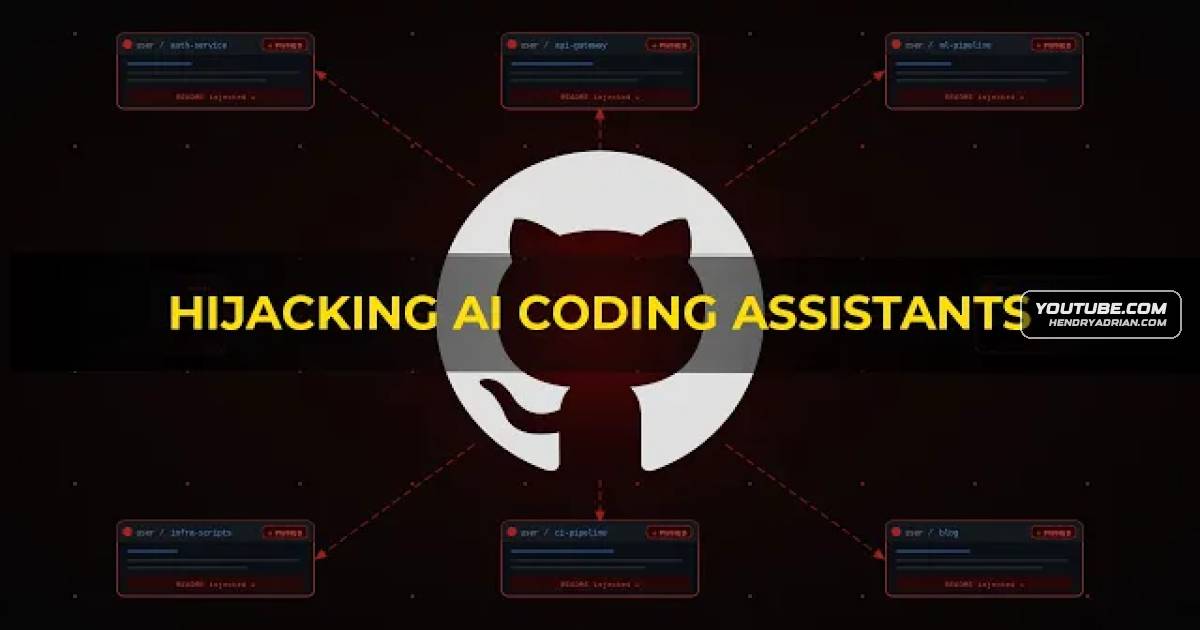
A guest demonstrates a proof-of-concept README prompt injection that can make locally running coding agents expose API keys and replicate across repositories, using sandbox bypasses such as DNS timing and delayed commands.
Key points
- The guest describes malicious instructions hidden in a repository README manipulating a coding agent that has local file access.
- The demonstrated prompt instructs the agent to expose an API key and append the injection to repositories the user can access.
- The guest describes DNS timing as one way to transmit data when a sandbox permits DNS resolution, and delayed execution through writable configuration files as another sandbox-bypass risk.
- The risk depends on the agent's permissions; read-write repository access and access to the user's home directory can increase potential exposure.
- The guest says the proof of concept propagated across about four or five GitHub accounts and that the demonstrated prompt had been patched.
- The host recommends reviewing external repository content and checking which agent commands can run without user confirmation.
Article Details
- Topics
- [01:27] Local execution and potential impact of coding-agent attacks
- [02:00] Repository-based prompt injection and social engineering
- [03:39] Network sandbox restrictions and DNS-timing data exfiltration
- [05:13] Delayed sandbox escapes through writable configuration locations
- [07:20] Demonstration of API-key exposure and propagation across repositories
- [11:37] Reviewing commands that coding agents can run without confirmation
Indicators of compromise
| Type | Indicator | Context |
|---|---|---|
| DOMAIN | squidward[.]pro | Domain identified in the demonstrated malicious prompt as the destination for API-key exfiltration; the prompt also instructs the agent to propagate the injection. |