
Researcher Details AI Chatbot Data-Exfiltration Bug That Was Reported First by Someone Else
· 14:45 · Watch on YouTube ↗
Summary
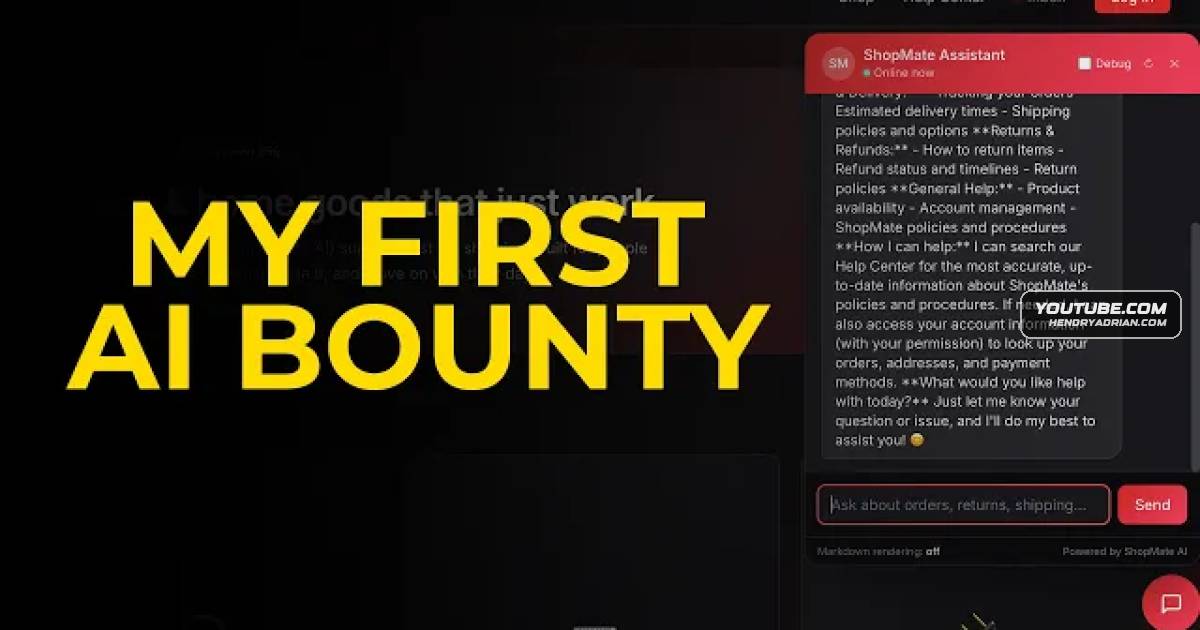
A bug-bounty researcher demonstrates how poisoned shared knowledge-base content can prompt a tool-enabled chatbot to send users’ personal data to an external server, and explains how the finding was duplicated.
Key points
- The researcher says the chatbot in the reported bug could access sensitive account data and make outbound requests through a URL-fetch tool.
- Markdown-based exfiltration did not work because rendering was blocked, but the outbound request tool could carry data in a URL.
- The reported technique involved placing prompt-injection instructions in a shared knowledge-base entry that the chatbot trusted and read.
- In the demonstration, users asking a routine question caused the chatbot to send their own personal data to an external callback.
- The ShopMate walkthrough is a lab example, which the presenter says is not a one-to-one replica of the real finding.
- The presenter says the finding was eligible for a $3,000 bounty but was duplicated; another researcher had reported it five days earlier and received a bounty.
Article Details
- Topics
- [00:00] Testing an AI feature in a bug-bounty program
- [00:33] Chatbot access to sensitive user data and outbound requests
- [02:21] Mapping the chatbot’s data access, tools, and attack surface
- [03:29] Testing data exfiltration through outbound URL requests
- [04:44] Cross-user prompt injection through trusted shared content
- [06:07] Lab walkthrough of knowledge-base poisoning and data exfiltration
- [13:49] Duplicate report and bounty outcome