
GhostLock Linux Kernel Flaw Enables Root Access and Container Escape
Summary
Researchers disclosed GhostLock (CVE-2026-43499), a Linux kernel flaw that can let a local user gain root and escape containers. Nebula says its exploit is 97% reliable and has published code; no in-the-wild exploitation is known. Install fully updated kernels.
Key points
- GhostLock is a Linux kernel use-after-free flaw present since 2011; an unprivileged local user can exploit unpatched systems for root access.
- Nebula Security says its exploit was 97% reliable in testing, can escape containers, and has published working code.
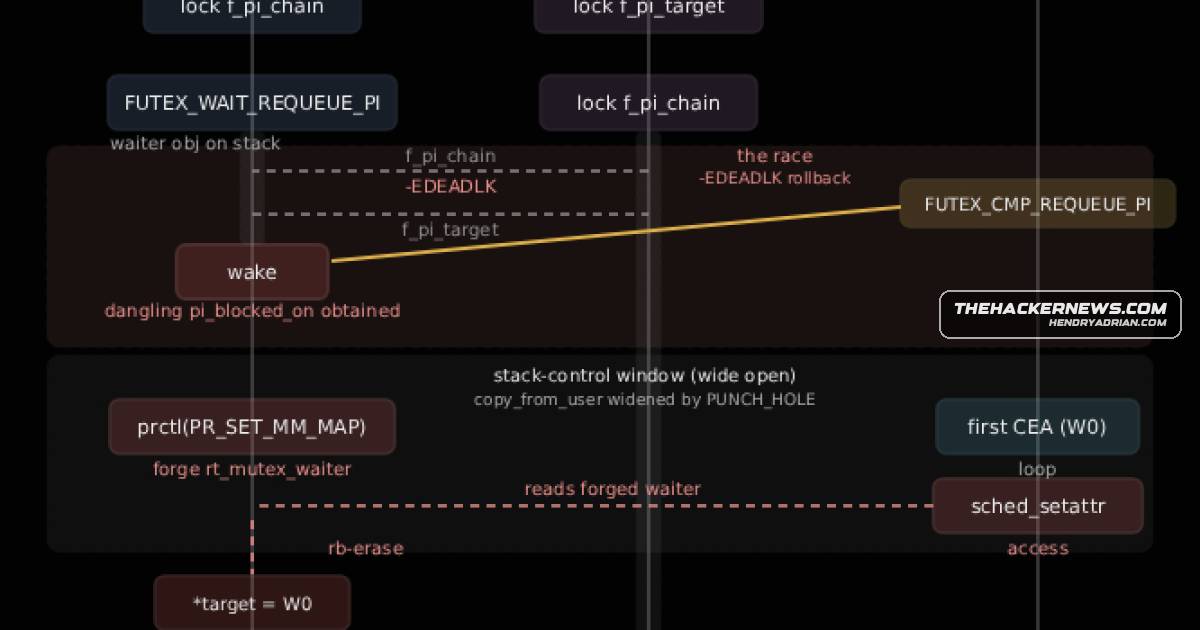
- The flaw stems from a lock-operation cleanup race that can leave the kernel using a stale pointer; exploitation requires no network access.
- The flaw was fixed in April, but distributions are rolling out updates unevenly. The article advises installing the current kernel package, since the initial fix introduced a separate crash issue, CVE-2026-53166.
- The article reports no known exploitation in the wild and says there is no complete workaround; two build options make exploitation harder but do not fix the flaw.
- Nebula says GhostLock completes its IonStack chain with Firefox flaw CVE-2026-10702, demonstrating a path from a malicious link to root on Android.
Article Details
- Vulnerability Types
- Use-after-free
- Local privilege escalation
- Severity
- High (CVSS 7.8/10)
- Exploitation Status
- not_reported
- Exploit Availability
- public_exploit
- Patch Status
- available
- Workarounds
- RANDOMIZE_KSTACK_OFFSET and STATIC_USERMODE_HELPER make exploitation harder, but are mitigations rather than fixes.
MITRE ATT&CK
T1068 · Exploitation for Privilege EscalationGhostLock's kernel exploit lets a logged-in local user gain root privileges.T1203 · Exploitation for Client ExecutionThe IonStack chain uses a Firefox flaw to run code inside the browser before GhostLock escalates to root.T1611 · Escape to HostNebula reported that the GhostLock exploit can escape containers.
CVE
CVE-2026-10702Nebula published working exploit code after turning the bug into a 97%-reliable root exploit, and it is also part of the IonStack chain with Firefox flaw CVE-2026-10702.CVE-2026-31431The class is not theoretical: another 2026 bug, Copy Fail (CVE-2026-31431), is already on CISA’s list of vulnerabilities seen in real-world attacks.CVE-2026-43499Researchers at Nebula Security disclosed GhostLock (CVE-2026-43499), a 15-year-old Linux kernel flaw that can let a logged-in local user gain full root access on unpatched systems, and it can also escape containers.CVE-2026-46242VEGA found GhostLock; days earlier, researchers disclosed Bad Epoll (CVE-2026-46242), a close cousin that also turns an unprivileged user into root.CVE-2026-53166The original fix introduced a separate crash bug (CVE-2026-53166), and the cleanup for that was still settling upstream in early July, so early builds may lack the final version.
Products
AndroidIt was proven through kernelCTF and, unusually for this class of bug, works on Android.LinuxResearchers at Nebula Security disclosed GhostLock (CVE-2026-43499), a 15-year-old Linux kernel flaw that can let a logged-in local user gain full root access on unpatched systems, and it can also escape containers.Mozilla FirefoxNebula published working exploit code after turning the bug into a 97%-reliable root exploit, and it is also part of the IonStack chain with Firefox flaw CVE-2026-10702.