
Researchers Demonstrate Fabius Bypass of Windows Memory Integrity
· 38:08 · Watch on YouTube ↗
Summary
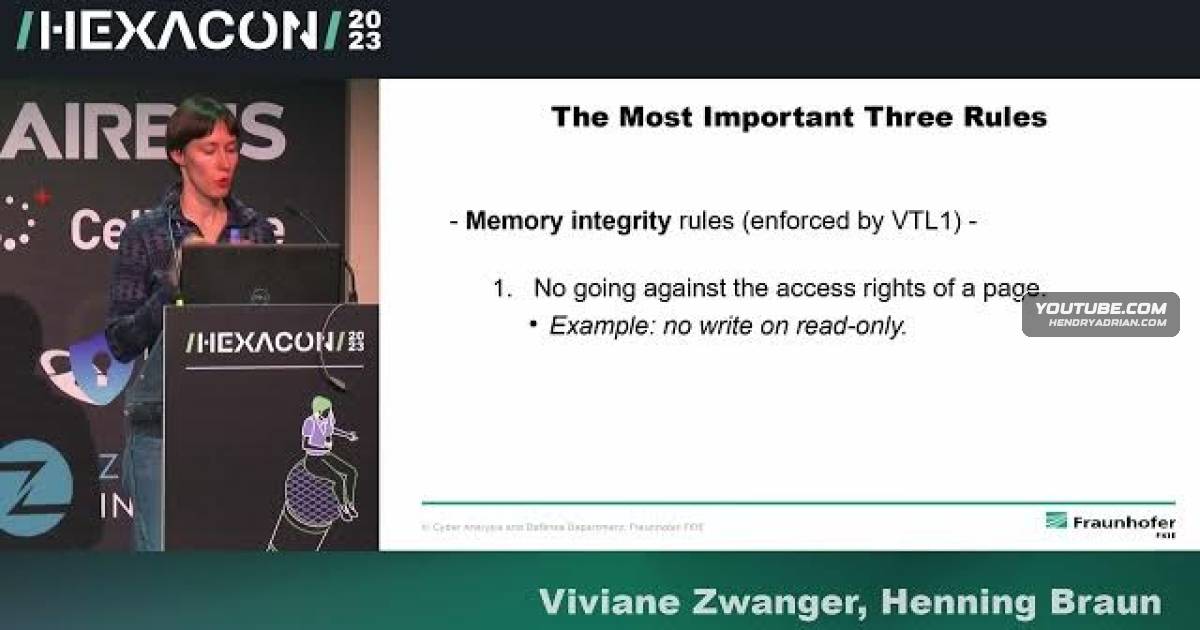
Researchers demonstrated Fabius, a bypass that uses an existing read-write primitive to alter protected kernel behavior while Windows Memory Integrity is enabled. They said the method cannot load unsigned drivers or shellcode.
Key points
- Fabius requires an existing read-write primitive, which could come from a vulnerable driver.
- The method copies protected page contents to a writable page, modifies the copy, and changes the page-frame mapping to point to it.
- In a demonstration using a fictional vault driver, the researchers changed a kernel routine so a user-mode program could dump the vault despite a caller authorization check.
- Replacing a kernel routine can cause a blue screen if other routines on the same page execute unexpectedly.
- The researchers said the bypass does not allow unsigned drivers or shellcode to be loaded and recommended enabling Memory Integrity.
Article Details
- Topics
- [01:06] Memory Integrity and vulnerable driver context
- [06:09] Virtual trust levels and memory access protections
- [15:17] Fabius vault-driver demonstration
- [22:52] Page-table manipulation and protected data modification
- [32:13] Kernel routine replacement and bypass limitations
- [36:29] Remaining protections and recommendation