
Python for Cybersecurity Course Demonstrates Testing and Security Automation
· 56:10 · Watch on YouTube ↗
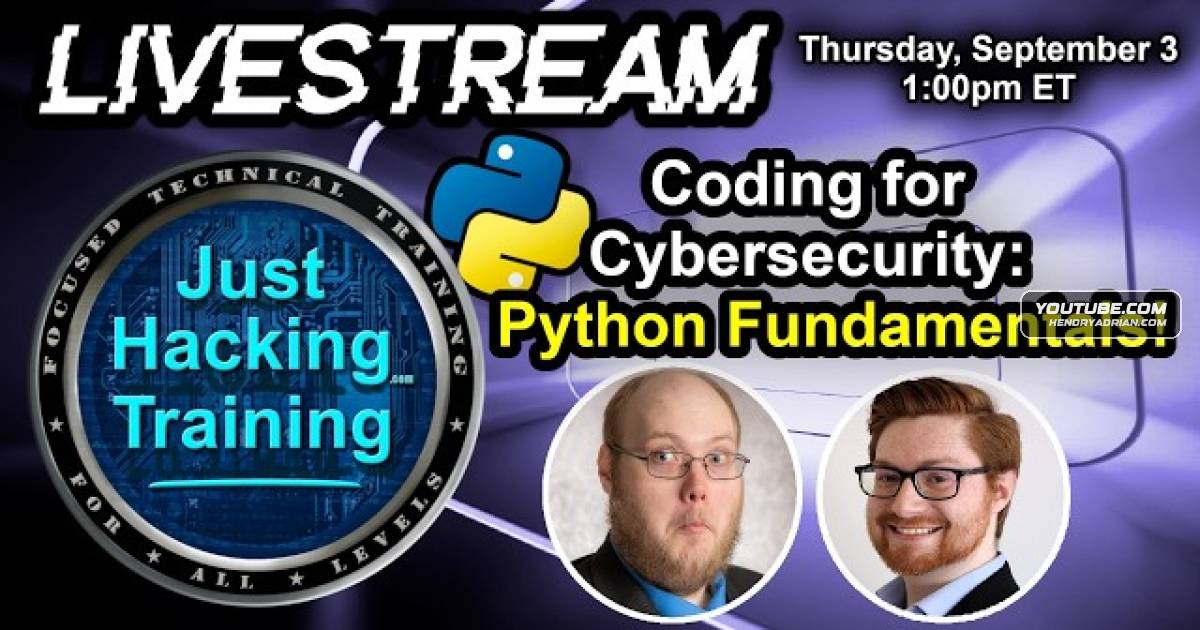
Summary
Brandon Keith demonstrates a Python training course for cybersecurity practitioners, covering unit testing, security data parsing and the risks of relying on unchecked AI-generated code.
Key points
- The course combines Python fundamentals with browser-based exercises and a cloud coding workspace.
- Keith demonstrates unit testing with a function that checks whether a port number is within the valid range.
- The speakers caution that AI-generated code and tests need review; Keith says AI can write tests merely to make them pass or select vulnerable libraries.
- Security exercises include parsing scan output and threat feeds and filtering logs.
- Keith describes using a Python JSON parser to turn Blood Hound results into a penetration-testing report, reducing manual data handling.
- Keith recommends specifying inputs, processing and desired outputs when asking AI to generate code.
Article Details
- Topics
- [15:06] Programming fundamentals and risks of unchecked AI-generated code
- [20:40] Python labs and cloud-based coding workspace
- [26:43] Python virtual environments and dependency management
- [29:57] Unit testing a port-validation function
- [35:41] Reviewing AI-generated tests and code
- [40:41] Parsing security data and automating penetration-test reporting